

Survival Benefit With Triple Therapy for Severe COVID-19
A year ago, when U.S. health government issued their first alert that COVID-19 would crusade astringent "disruption to everyday life," doctors had no effective treatments to offer beyond supportive care.
There is even so no cure, but thanks to an unprecedented global enquiry endeavour, several treatments are helping patients survive COVID-nineteen and stay out of the hospital altogether.
COVID-nineteen treatments target 2 broad problems: the coronavirus'southward ability to spread through the body, and the impairment caused by the body's immune organisation response. When the virus enters the body, it takes over cells and uses them to replicate itself. In response, the body sends inflammatory signals and immune cells to fight the virus. In some patients, that inflammatory response can continue even later on the virus is under command, leading to damage in the lungs and other organs.
The all-time tool is prevention, including using face up masks and vaccines. Vaccines train the immune organisation to fight off attackers. With less risk of an uncontrolled infection, they can cut the run a risk of death from COVID-19 to nigh null. Just vaccine supplies are limited, even with a third vaccine now authorized for U.S. use, so treatments for infected patients remain crucial.
Every bit doctors who work with COVID-19 patients, we take been post-obit the drug trials and success stories. Here are vi treatments usually used today for COVID-19. Equally you'll meet, timing matters.
Treatments that can go along you out of the hospital
Two promising types of treatments involve injecting antiviral antibodies into high-chance COVID-xix patients earlier the person becomes severely ill.
Our bodies naturally create antibodies to recognize foreign invaders and help fight them off. But natural antibody production takes several days, and SARS-CoV-2 – the coronavirus that causes COVID-19 – replicates fast. Studies show that injecting patients with antibodies soon after symptoms begin tin help protect patients against serious infection.
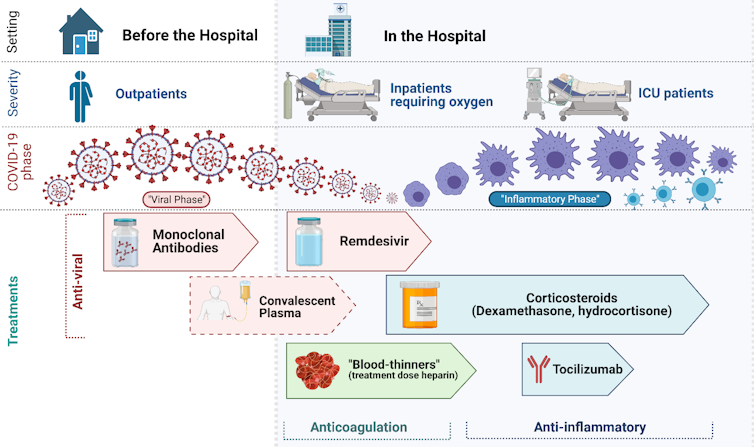
Treatments for COVID-19 and their timing. Georgios D. Kitsios, CC Past-ND
Monoclonal antibodies: These lab-engineered antibodies tin can bind to SARS-CoV-ii and prevent the virus from entering cells and infecting them. They include Bamlanivimab and the combined therapy casirivimab/imdevimab adult by Regeneron. The U.S. Food and Drug Administration granted emergency use authorization for these therapies because they have been found to protect loftier-hazard patients from hospitalization and decease. One time patients are ill enough to demand hospitalization, however, studies haven't found a proven benefit from them.
Convalescent plasma: Another way to evangelize antibodies involves claret drawn from patients who take recovered from COVID-nineteen. Convalescent plasma is primarily given in enquiry settings because the clinical evidence so far is mixed. Some trials show benefits early in the illness. Other studies have not shown any benefit in hospitalized patients.
There may exist a role for convalescent plasma as a supplemental therapy for some patients because of the growing threat of mutated SARS-CoV-2 variants, which may evade monoclonal antibody therapy. Notwithstanding, careful inquiry is necessary.
Treatments for hospitalized patients
Once patients go so sick that they have to be hospitalized, treatments change.
Most hospitalized patients have difficulty animate and depression oxygen levels. Low oxygen occurs when the virus and corresponding immune response injure the lungs, resulting in swelling in lung air sacs that restricts the corporeality of oxygen getting into the claret. Patients hospitalized with COVID-xix usually need supplemental medical oxygen to help them breathe. Doctors often treat patients on oxygen with the antiviral agent remdesivir and anti-inflammatory corticosteroids.
Remdesivir: Remdesivir, originally designed to treat hepatitis C, stops the coronavirus from replicating itself by interfering with its genetic building blocks. It has been shown to shorten the length of hospital stays, and doctors may prescribe it to patients on oxygen shortly later on arrival in the hospital.
Corticosteroids: Steroids calm the body's immune response and have been used for decades to treat inflammatory disorders. They are likewise widely bachelor, inexpensive and well-studied medications, and so they were amongst the first therapies to enter clinical trials for COVID-19. Several studies take shown that low-dose steroids reduce deaths in hospitalized patients who are on oxygen, including the sickest patients in the intensive care unit of measurement, or ICU. Following the findings of the landmark RECOVERY and REMAP-CAP COVID-xix studies, steroids are now the standard of care for patients hospitalized with COVID-19 who are treated with oxygen.
Blood thinners: Inflammation during COVID-xix and other viral infections tin also increment the risk of blood clots, which can cause centre attacks, strokes and unsafe clots in the lungs. Many patients with COVID-xix are given the blood thinners heparin or enoxaparin to prevent clots earlier they occur. Early on data from a large trial of COVID-19 patients suggests that hospitalized patients do good from college doses of blood thinners.
Some patients with COVID-19 go so sick that they demand an ICU for loftier levels of oxygen back up or a ventilator to help them breathe. There are several therapies available for ICU patients, just ICU patients have not been found to benefit from high doses of claret thinners.
Treating the sickest patients
ICU patients with COVID-19 are more likely to survive if they receive steroids, studies have constitute. Nevertheless, low-dose steroids lone may non be plenty to curb excessive inflammation.
Tocilizumab: Tocilizumab is a lab-generated antibiotic that blocks the interleukin-half dozen pathway, which can crusade inflammation during COVID-nineteen and other diseases. New results from the REMAP-CAP trial that accept not yet been peer-reviewed suggest that a single dose of tocilizumab given inside one to two days after being placed on respiratory support reduced the risk of death in patients already receiving depression-dose steroids. Tocilizumab has also been shown to do good patients with loftier levels of inflammation in early results from another trial.
These innovative therapies can help, but conscientious supportive intendance in the ICU is also crucial. Decades of extensive enquiry have divers core management principles for helping patients with severe lung infections who need ventilators. These include avoiding underinflation and overinflation of the lung by the ventilator, treating pain and anxiety with low levels of sedative medications, and periodically placing sure patients with low oxygen levels on their belly, among many other interventions. The aforementioned fundamental principles likely apply to patients with COVID-19 to help them survive and recover from a critical affliction that can terminal weeks or months.
Medical progress since the start of the pandemic has been awe-inspiring. Doctors now take vaccines, antiviral antibodies for high-take a chance outpatients and several treatments for hospitalized patients. Continued enquiry volition exist crucial to improve our ability to fight a disease that has already claimed more than two.five million lives worldwide. 
This article is republished from The Conversation under a Artistic Eatables license. Read the original article.
Source: https://www.pbs.org/newshour/health/6-covid-19-treatments-helping-patients-survive
Posted by: gardnerthertat.blogspot.com
0 Response to "Survival Benefit With Triple Therapy for Severe COVID-19"
Post a Comment